Collective Visioning: From Imagination to Participation
How Speculative and Participatory Futures Are Transforming Foresight Practice

Rethinking Foresight: From Analysis to Engagement
For decades, foresight has been largely driven by experts. Analysts, strategists, and researchers have mapped trends, developed scenarios, and advised decision-makers on possible futures. While these approaches remain valuable, they often struggle to address one fundamental challenge. The future is not shaped by experts alone. It is shaped by societies, by collective imagination, and by the ability of people to see themselves in what lies ahead.
This is where foresight is undergoing a profound transformation. Increasingly, the field is moving beyond prediction and analysis toward participation and experience. Instead of asking what the future might look like, we are beginning to ask who gets to imagine it and how those imaginaries influence decisions in the present.
Participatory and speculative futures approaches are at the heart of this shift. Together, they open up foresight processes, making them more inclusive, more tangible, and ultimately more impactful.
In my work advising the European Commission, particularly in the context of the Futures Garden, I have seen how powerful this shift can be. When people are not just observers of the future but active contributors, the quality of insights changes. Conversations deepen. Assumptions are challenged. And most importantly, futures become something people can relate to and act upon.
That is why metaphors are a frequent tool in our futures work, and I'd like to use one now to share some of the insights and impacts of the Futures Garden project.
Let’s Imagine: Entering the Futures Garden
Imagine a garden where a mycorrhizal network, a web of fungal threads, connects all plant roots to their environment. Just as this network links everything below the surface, the Futures Garden connects our past, present, and future, inviting you to look beyond the surface and cultivate new possibilities.
As you wander through the garden, you encounter plants and landscapes that feel both familiar and profoundly unsettling. Imagine if you could experience this ecosystem from a different perspective. With such a Symbiotic alignment you would encounter the sensory world of other species, challenging your understanding of intelligence and coexistence. Whilst exploring your surroundings, imagine you could see what other humans feel while wandering through the garden with you. A device like Inwards that makes emotions visible to everyone invites reflection on a society that values emotions and prioritises collective wellbeing over economic growth, questioning dominant ideas of progress and value. From this Inwards focus you continue the journey through the garden, wondering if a new path as described in After Jubilee, which imagines a social shift, is prompting you to reconsider the foundations of current systems and the meaning of fairness. You start to imagine a world in the future of 2040 where Coming of Age has changed significantly as identity and belonging have evolved to holistic world views, seeing humanity as part of an ecosystem such as our garden rather than apart.
People visiting the garden do not simply observe these possibilities. They engage with them. They pause, reflect, question, and discuss how to nurture them. Different interpretations emerge, sometimes aligned, sometimes conflicting, but always revealing underlying beliefs and expectations about the future.
What is striking in these moments is not whether these futures can bloom or yield fruit. What matters is something far more fundamental. Do we consider them worth cultivating, and if not, what seeds would we choose to plant instead?
This is the point at which foresight begins to provoke change.
It moves beyond analysis and projection and becomes a shared space of exploration. Futures are no longer distant abstractions, but tangible experiences that people can relate to, challenge, and reimagine.
When futures are made tangible, participants do not remain observers. They become active contributors, shaping perspectives, questioning assumptions, and opening up new pathways for action.
Participatory Futures: From Audience to Co-Creators
Participatory futures fundamentally challenge the traditional separation between experts and audiences. Instead of presenting finished scenarios to stakeholders, they invite diverse groups to actively engage in imagining, discussing, and shaping possible futures.
This shift is not just methodological. It is deeply cultural. It requires letting go of control and embracing uncertainty, plurality, and sometimes even contradiction. Different people will imagine different futures based on their experiences, values, and expectations. This diversity is not a weakness. It is the core strength of participatory foresight.
For foresight practitioners and workshop facilitators, this means designing processes that enable meaningful engagement. It means creating spaces where participants feel empowered to contribute, even if they do not consider themselves experts. And it means translating complex future developments into formats that are accessible and relatable.
However, participatory futures come with a practical challenge. How do you make abstract futures tangible enough for people to engage with them?
This is where speculative futures approaches become essential.
Speculative Futures: Making the Future Tangible
Speculative futures focus on creating concrete representations of possible futures. Instead of describing a future in abstract terms, they make it visible, tangible, and experiential. This can take many forms, ranging from narratives and prototypes to physical artefacts that people can interact with.
The underlying idea is simple but powerful. People engage more deeply with futures when they can see, touch, or experience them. A written scenario might describe a future food system. A speculative futures artefact, on the other hand, might be a product label, a policy document, or an everyday object from that imagined time in the future. Suddenly, the future is no longer distant. It becomes something that feels real.
Research in speculative design and futures studies has shown that these approaches can unlock new types of conversations. They allow participants to explore not only what might happen, but also how it would feel, what dilemmas might arise, and what trade-offs would need to be made.
This makes speculative futures a powerful enabler for participatory processes. They act as bridges between abstract thinking and lived experience.
Futures Garden in Practice: How to Use Speculative Artefacts in Participatory Workshops
One of the most common challenges in participatory foresight is this. Even when participants are motivated and diverse, discussions often remain abstract. People talk about trends, technologies, or systems, but struggle to connect these ideas to lived experience.
This is precisely where the Futures Garden approach becomes powerful. Instead of starting with analysis, it starts with experience. The artefacts are not outputs of foresight. They are entry points into it.
Artefacts from the future are designed to make possible worlds tangible. They provide a shared reference point that allows participants to explore complex futures in a concrete and emotionally engaging way. They invite reflection, debate, and imagination, turning abstract scenarios into something people can see, feel, and question.
In my work on this project, I have seen how these artefacts fundamentally shift workshop dynamics. Instead of asking participants to imagine a future from scratch, you invite them into a future that already feels partially real.
The Core Principle: Start with Experience, Not Explanation
Traditional workshops often begin with presentations. Trends are introduced, frameworks are explained, and only then participants are invited to engage.
With Futures Garden, the sequence is reversed. You begin with immersion.
Participants encounter an artefact without prior explanation. They are invited to observe, interpret, and react. This creates curiosity and emotional engagement before analytical thinking sets in. It also levels the playing field. Everyone starts from the same experience, regardless of their expertise.
This shift is subtle but transformative. It changes participants from passive listeners into active sense-makers.
Link to the EU project: https://policy-lab.ec.europa.eu/futures-garden_en
Four Artefacts, Four Entry Points into the Future
Each artefact in Futures Garden opens a different window into possible futures. As facilitators, our role is not to explain them, but to activate them.
1. Symbiotic: Expanding Human Perception
Make it stand out
Whatever it is, the way you tell your story online can make all the difference.
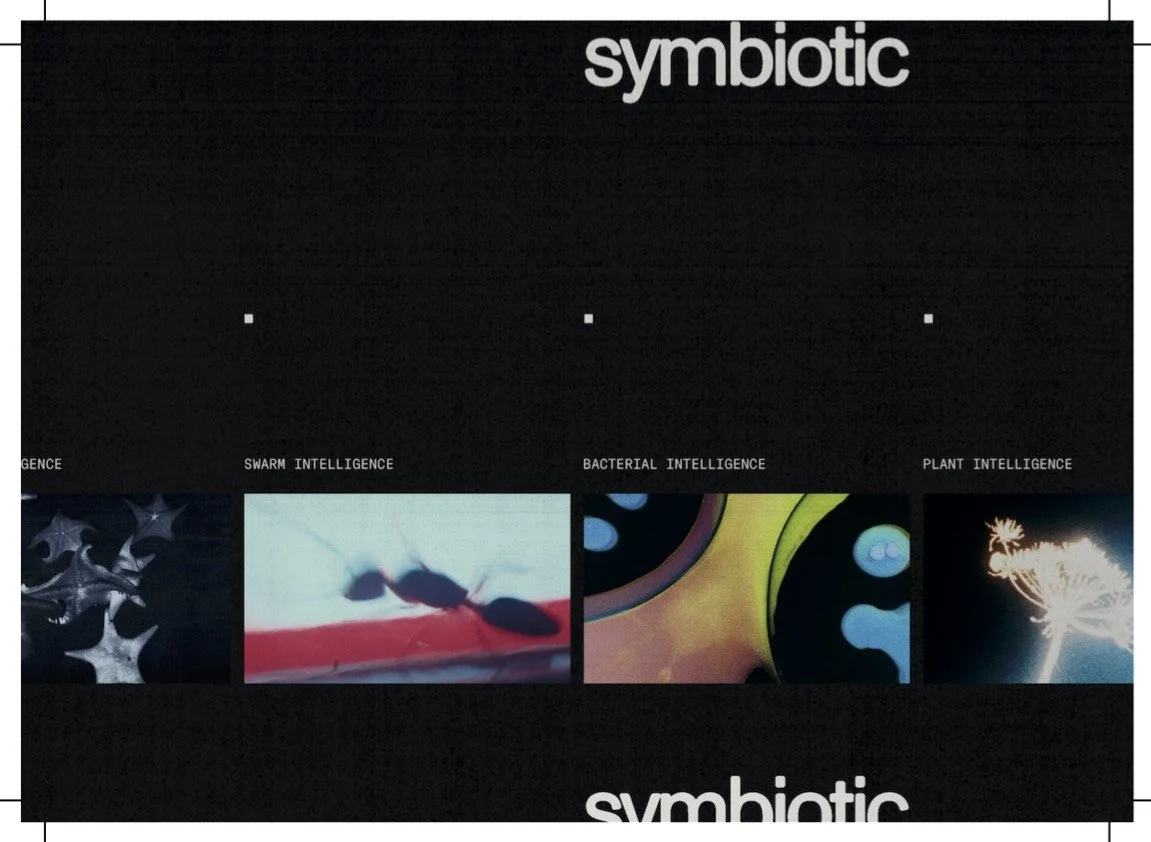
The artefact Symbiotic, a short movie (created by Modem, Purple Martin), explores a future in which humans can experience the sensory worlds of other species through technological mediation. Set in the Symbiocene, it challenges deeply rooted assumptions about intelligence, agency, and our relationship with non-human life. It invites participants to step outside a human-centred worldview and consider what it means to coexist with other forms of intelligence.
In a workshop setting, Symbiotic is particularly powerful for discussions around sustainability, biodiversity, and ethics. It enables participants to move beyond abstract debates about environmental responsibility and instead explore empathy as a driver of decision-making.
Typical facilitation prompts include:
What changes when we no longer see ourselves as separate from ecosystems?
How would policies look if they included non-human perspectives?
What new responsibilities emerge from this expanded perception?
Teaser
Website
https://policy-lab.ec.europa.eu/futures-garden/symbiotic_en
Full Credits
https://policy-lab.ec.europa.eu/futures-garden/full-credits_en#coming-of-age
2. Inwards: Redefining Progress and Wellbeing
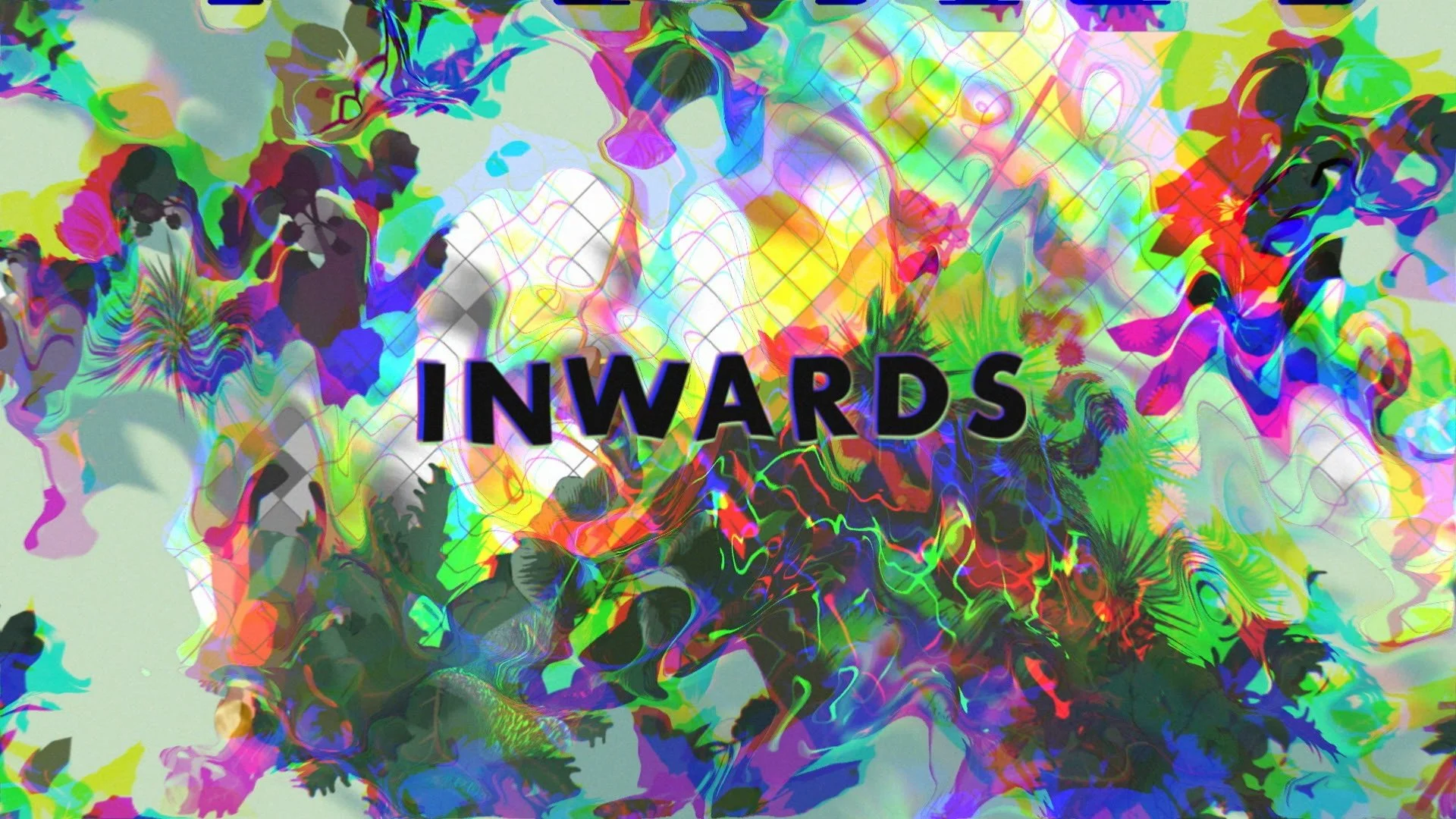
The artefact Inwards (created by Normals, Institutul de Prospectiva, Austrian Institute of Technology) presents a radically different future trajectory. In this world, society has moved away from the idea of constant economic growth and instead focuses on self-reflection, emotional development, and collective well-being.
Through a series of animated narratives, it explores practices and technologies that support introspection, emotional sharing, and a renewed sense of togetherness.
In workshops, Inwards is highly effective when exploring questions of societal values, mental health, and alternative economic models. It allows participants to reflect on what progress actually means and whether current systems align with desired futures.
Typical facilitation prompts include:
What would success look like in a post-growth society?
What tensions arise between individual freedom and collective well-being?
How can we cultivate emotional connection and self-reflection as essential tools for learning from ourselves and others?
Teaser
Website
https://policy-lab.ec.europa.eu/futures-garden/inwards_en
Full Credits
https://policy-lab.ec.europa.eu/futures-garden/full-credits_en#inwards
3. After Jubilee: Reimagining Economic Systems
After Jubilee (created by Fred Wordie, Alia ElKattan) introduces a future shaped by social change. Debt has been erased, new temporal systems have been introduced, and societal priorities have shifted accordingly.
Framed as a speculative radio show, it invites participants to explore the transformation of deeply embedded social systems and the resulting consequences for everyday life. It helps them imagine this drastic, almost impossible systemic change through the eyes of people who have experienced it and are adapting to a new reality. New languages, new concepts, new ways of living.
This artefact is particularly relevant for discussions around economic resilience, inequality, and systemic change. It helps participants question assumptions that are often perceived as fixed. To enhance the immersive experience, participants can interact by calling a dedicated phone number to leave their insights, which are then evaluated and integrated into the discussion.
Typical facilitation prompts include:
What would happen if a transition sets in and we move to new systems?
How can we connect, support one another, and adapt to social change?
Which actors would benefit and which would lose?
Teaser
Website
https://policy-lab.ec.europa.eu/our-futures_en
Full Credits
https://policy-lab.ec.europa.eu/futures-garden/full-credits_en#after-jubilee
4. Coming of Age 2040: Identity and Collective Experience
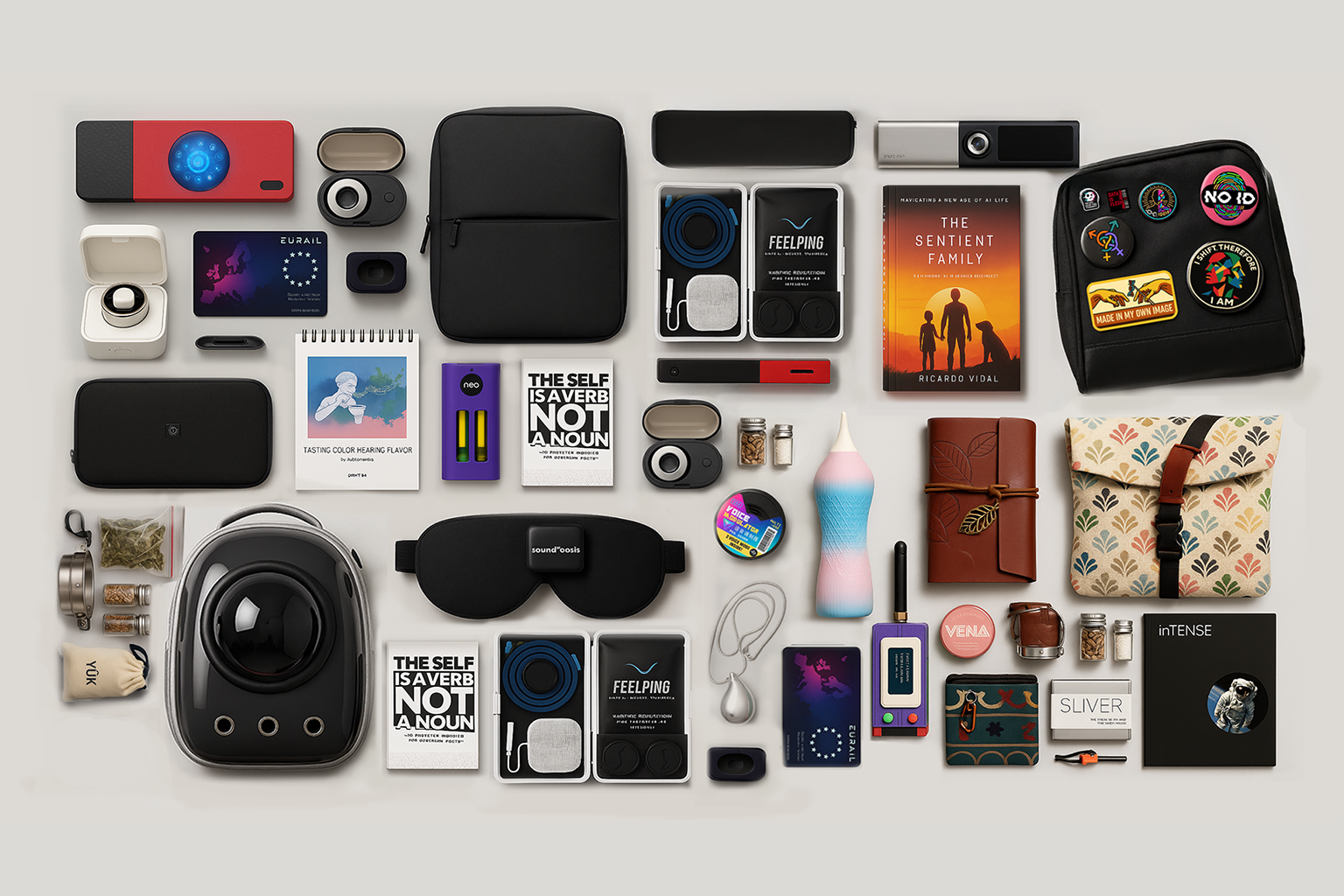
The artefact Coming of Age 2040 (created by Futurity Systems) creates an interactive and collective experience centred on identity, belonging, and generational change in a future Europe. It focuses on how individuals navigate transitions into adulthood within changing societal structures and cultural norms.
In participatory settings, this artefact is particularly effective for bringing the future into your conversation. By imagining how young people might live in 2040, it helps us understand the necessity for more flexible, adaptable approaches. It is not only valuable for engaging younger audiences, but also for exploring long-term societal transformations. Crucially, it forces us to confront our responsibilities to future generations, shifting the focus from short-term policy to the enduring world they will inherit. As an interactive step, participants can consent to use an AI tool that helps summarize their ideas and narratives, sharing them directly with the Futures Garden team.
Typical facilitation prompts include:
What does it mean to “come of age” in the future?
How do societal expectations shape life paths?
Which institutions gain or lose relevance for younger generations?
Teaser
Website
https://policy-lab.ec.europa.eu/futures-garden/coming-age-2040_en
Full Credits
https://policy-lab.ec.europa.eu/futures-garden/full-credits_en#coming-of-age
A Practical Workshop Flow Using Futures Garden Artefacts
Based on my experience, a successful participatory futures workshop using these artefacts typically follows five phases.
1. Immersion
Participants engage with one or multiple artefacts. This can be done through video screenings, installations, or printed materials. The key is to create an uninterrupted experience. No explanation is given at this stage.
2. Reflection
Participants individually reflect on their impressions. This can be guided through simple questions:
What surprised you?
What felt desirable or undesirable?
What felt familiar?
This step anchors the experience in personal perception.
3. Collective Sensemaking
Participants discuss their reflections in small groups. Here, different interpretations emerge, revealing diverse perspectives and assumptions. This is where participatory futures come to life.
4. Translation to Present Implications
The discussion shifts from the future back to the present:
What signals of this future already exist today?
What would need to change to move toward or away from it?
What actions could be taken now?
This step connects imagination with action.
5. Prototyping and Action
Participants develop ideas, concepts, or interventions inspired by the artefacts. This can include policy ideas, business concepts, or social initiatives. This phase embodies what Futures Garden calls "provo-typing", a fusion of proactive thinking and prototyping designed to help you be ready to answer accordingly when the future knocks on your door.
Why This Approach Works
What makes Futures Garden particularly powerful is not just the artefacts themselves, but the process they enable. They shift foresight from abstract to tangible; from expert-driven to participatory, and from analytical to experiential.
They create a space where imagination is not an abstract exercise, but a shared experience that leads to meaningful dialogue and actionable insights. And perhaps most importantly, they remind us that futures are not something we predict. They are something we collectively explore, question, and shape.
Scaling Participation: From Artefacts to Collective Intelligence with Our Futures

While Futures Garden demonstrates how speculative artefacts can transform workshops, a natural next question emerges for us as foresight practitioners. How can these participatory processes be scaled beyond individual sessions? How can we move from isolated conversations to a broader, collective intelligence about the futures people want?
This is where the OurFutures initiative becomes highly relevant.
Developed within the ecosystem of the European Commission, OurFutures invites people across Europe to write short, imaginative stories about their desired futures. These are not expert scenarios. They are personal, situated, and often emotional narratives that reflect how individuals envision the world they want to live in.
For practitioners, this represents a powerful shift. Instead of generating all future narratives within workshops, you can draw on a continuously growing repository of citizen-generated futures.
From Stories to Actionable Insight
At first glance, these stories may appear qualitative and subjective. However, when aggregated and analysed, they reveal patterns, tensions, and emerging priorities that are highly relevant for foresight activities.
They provide insight into:
What people consider desirable futures
Which values are gaining importance
Where hopes and fears converge or diverge
How different groups imagine change
This makes OurFutures more than a participation platform. It becomes a living dataset of collective imagination. For foresight practitioners, this opens up new possibilities. We are no longer limited to designing futures from scratch. You can curate, interpret, and build upon narratives that already exist. This not only enriches our work but also grounds it in real societal perspectives.
How Practitioners Can Use OurFutures in Their Work
There are several ways to integrate OurFutures into participatory foresight processes.
1. As Input for Workshop Design
Before designing a workshop, practitioners can explore existing stories to identify recurring themes or surprising perspectives. These insights can inform the selection of topics, scenarios, or artefacts.
For example, if multiple stories emphasise local resilience or community-based systems, this can guide the framing of workshop discussions or the choice of Futures Garden artefacts.
2. As Stimulus Material in Workshops
Stories from OurFutures can be used alongside speculative artefacts to enrich engagement. While artefacts provide tangible entry points into specific futures, narratives add emotional depth and personal perspective. Participants can read selected stories and reflect on them, compare them with artefacts, or use them as inspiration for their own ideas.
3. As a Basis for Creating New Future Images
One of the most powerful applications is using these narratives to generate new “images of the future”. Participants can build on existing stories by extending them into more detailed scenarios, translating them into artefacts or prototypes, or combining multiple narratives into hybrid futures.
This process helps move from isolated ideas to more developed and actionable future visions. It also reinforces a key principle of participatory foresight. Futures are not created in a single moment. They evolve through continuous iteration, dialogue, and reinterpretation.
4. As a Tool for Driving Positive Change
Because OurFutures focuses on desirable futures, it naturally supports a more constructive and forward-looking perspective. In many foresight processes, discussions are dominated by risks and disruptions. While these are important, they can limit imagination and reduce motivation for action.
By contrast, working with positive future images allows participants to articulate what they want, not only what they want to avoid, to identify pathways toward desirable outcomes, and to align them around shared visions. This makes it easier to translate foresight into direction and action.
How to Participate and Contribute
Participation in OurFutures is intentionally simple and open. Individuals are invited to write short stories about their desired futures. These can focus on everyday life, work, technology, society, or any aspect that matters to them. The emphasis is on imagination grounded in possibility.
For practitioners, contributing to the platform serves multiple purposes.
It allows us to:
actively shape the collective pool of future narratives
bring perspectives from your workshops into a broader context
engage your participants beyond the workshop itself
Encouraging workshop participants to submit their own stories can extend the impact of your sessions and connect them to a wider European conversation about the future.
Teaser
Website
https://policy-lab.ec.europa.eu/our-futures_en
From Workshop to Ecosystem: Connecting Futures Garden and OurFutures
When used together, Futures Garden and OurFutures create a powerful ecosystem for participatory foresight. The Futures Garden artefacts enable deep, immersive engagement within workshops. They make futures tangible and spark meaningful discussion. The OurFutures platform extends this engagement beyond the workshop. It captures narratives, scales participation, and transforms individual contributions into collective intelligence.
For practitioners, this combination offers a new way of working. Instead of designing foresight as a linear process, you can think of it as a continuous cycle:
engage participants through artefacts
generate insights and narratives
feed these into a broader ecosystem
draw on collective intelligence for future processes
This creates a dynamic and evolving approach to foresight that is both participatory and scalable.
Conclusion
From Imagining Futures to Shaping Them
Participatory and speculative futures approaches are not just new methods. They represent a fundamental shift in how we understand foresight. They move us from observing the future to experiencing it. From analysing possibilities to co-creating them.
From isolated insights to collective intelligence.
For foresight practitioners and workshop facilitators, this shift opens up new opportunities. It allows you to design processes that are more inclusive, more engaging, and ultimately more impactful.
By working with speculative artefacts such as those developed in Futures Garden, we can make futures tangible and accessible. By integrating platforms like OurFutures, we can scale participation and ground your work in real societal perspectives.
The future is not a distant concept. It is something we continuously imagine, negotiate, and shape together.
The question is no longer whether we should involve people in foresight. The question is how we design the tools, spaces, and processes that make this participation meaningful. And perhaps most importantly, how we turn imagination into action.
Over the years, I have worked with a wide network of foresight practitioners, facilitators, and organisations across Europe and beyond. What I see today is a growing need to move from isolated foresight exercises to shared ecosystems of imagination.
This is why I want to actively invite this community to engage with these tools. Use the artefacts. Experiment with them in your workshops. Build on the narratives created through OurFutures. And most importantly, contribute your own perspectives.
Because the real power of participatory foresight does not lie in individual methods. It lies in collective practice.
After Thought: Making the Future Public
Collective Visioning as a Tool for Democratic Renewal. Democracy falters when people stop believing their voice shapes the future. Collective visioning reverses that, bringing communities together not to debate what is, but to imagine what could be.
It is less a policy tool than a practice of solidarity: structured conversations where diverse voices map shared hopes, surface hidden tensions, and build the common ground that institutions alone cannot manufacture.
The result is not a plan. It is ownership, a sense among citizens that the future is something they are making together, rather than something being made for them.
That shift in feeling is where democratic renewal actually begins.
Democracy falters when people stop believing their voice shapes the future. Collective visioning reverses that; it is the practice of making the future public: bringing citizens and those who govern them together not to debate what is, but to imagine, jointly, what could be. Not as opposing forces, but as people who need each other to see further than either could alone.
That togetherness requires something courageous from both sides. Citizens must dare to speak beyond complaint to vision boldly, and trust that it matters. And those who govern must dare to let go of control, to listen before they lead, and to let the collective imagination of a community shape and renew their own sense of purpose. When that exchange happens, something shifts: politics stops being something done to people, and becomes something done with them.
A Sustainable Transition requires Innovative Policymaking
The Futures Garden is designed not only to explore new tools, but to actively support the mission of sustainability transition. It is a space for discussing ideas that may, or may not, accelerate the shift toward more sustainable futures. And while the direction of that future matters, so do the artefacts themselves: they signal new ways of working, new ways of engaging, and place innovative policymaking at the very heart of that transformation. Policymaking that is more cognitively rich, that opens space for self-reflection and the sharing of emotions, that connects social change to new languages and concepts, and that is mindful of the long term, designing for the future as well as the present.